Monday, October 22, 2012

The Milgram Experiment

"The Milgram Experiment" 1961 by Social Psychologist, Stanley Milgram is a scientific study of human behavior. The study measures the willingness of participants to obey people in authority who instructed them to perform acts that conflicted with their own personal conscience. Twelve volunteers were selected and they were informed that the experiment was a memory test, after which the actual participants were introduced to an actor (as another volunteer). The Learner was given a list of multiple choice questions to review that the teacher will ask questions from. The teacher was then taken into another room, where he/she is shown the generator that will shock the learner if he gives an incorrect answer, and for every wrong answer the voltage will be increased from 15 up to 450 volts. 
Three of the twelve actual participants refuse to perlong with the experiment because they thought it was very scary, stressful and inhuman to be perform such cruel act on a human being after the actor started to bang on the wall that separated him from the subject. After several times banging on the wall and complaining about his heart condition, all responses by the learner would stop.  
Whenever the teacher indicated his desire to halt the experiment, he was given a succession of verbal prods by the experimenter, in this order:
1.     Please continue.
2.     The experiment requires that you continue.
3.     It is absolutely essential that you continue.
4.     You have no other choice, you must go on.
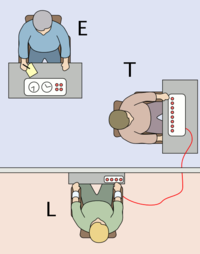


The experimenter (E) orders the teacher (T); the subject of the experiment, to give what the subject (teacher) believes are painful electric shocks to a learner (L), who is actually an actor and confederate. The subject believes that for each wrong answer, the learner was receiving actual electric shocks, however in reality there were no such punishments. Being separated from the subject, the confederate set up a tape recorder joined with the electro-shock generator, which played pre-recorded sounds for each shock level.

What I have concluded from both "The Five Faces of Oppression" and "The Milgram Experiment" is that they are both based on the matter of POWER, OBEDIENCE, DEVIANCE AND ORDER. We are obedient in following instruction from people in authority in any institution such as the family, school, church, government etc. and as bear consequences in any group, people tend to use social mechanism such as ridicule, gossip, opprobrium as a mean of punishment  for violating the social norms, rather than using physical violence which is the oldest method that have been used for decades to restore formality  

I remember growing up, my mother being the breadwinner of the household and a single-parent, I had to obey her every rules, and if I am disobedient she would use ridicule as a mean of causing embarrassment to me. Like one night i was down the street with my friends chit chatting and the lights went out, and even though i knew i should have make an attempt to find my way home to avoid any potential threat, i insist on staying to chat with them, little after I felt someone grab me from behind and start hitting me, when turn around it was my mother saying "likkle gal yuh nuh see light gone and you  pon di road like you a boy pickney and man can tek yuh wey and rape yuh. Go inna di yaad before me embarrass you out yah!" Little she knew I was already feeling that way because my friends were all laughing at me and for days I refused to see them. But, now I understand the true meaning of what mom was try to tell me. Now I realize the importance of social control, because if she had not put her feet down firmly on the ground and raise me in the right way I might have ended up elsewhere.  


Sunday, October 21, 2012

THE FIVE (5) FACES OF OPPRESSION


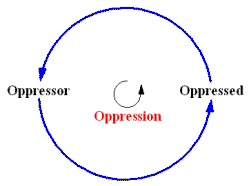
Oppression is a feeling of being heavily weighed down in mind or body. Oppression allows people in authority or who has greater access to resources the power of belittling or manipulate others in lower position of society. Oppression can only survive through silence. As the title indicates, there are five faces of oppression:


1. Exploitation- demanding labor without a fair wage

2. Violence- is the oldest method use by any society with the help of the military force or police to sustain civilization by preventing physical violence on racial, gender, age discrimination and also disabilities etc.

3. Marginalization- depriving a group of people from their livelihood by taking away their only means of survival (resources, education, culture, norm) 

4. Powerlessness- depriving people from their social life taking away their rights to FREEDOM. These people are like slaves 

5. Cultural imperialism- is forcing your culture or language on to another society. 
The insight of McDonalds and junk food culture globally. Another one is the flooding of violence and sex filled comics from Japan.


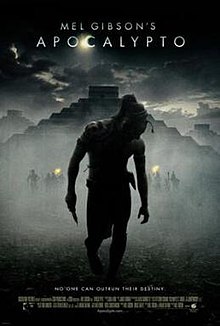
The ones that really standout to me the most are "MARGINALIZATION and POWERLESSNESS" which reminds me of the movie "Apocalypto" by Mel Gibson. The first time i watched this movie i thought it had mimic act of the Caribs depriving Taínos of their social life. Tainos were challenged by an invading South American tribe called the Caribs. Fierce, warlike, sadistic, and skillful at using poison-tipped arrows, they raided Taíno settlements for slaves and bodies for the completion of their rites of cannibalism. Some ethnologists argue that the reputation of the Taínos, shaken by the attacks of the Caribs, was already jeopardized by the time of the Spanish occupation. In fact, it was Caribs who fought the most effectively against the Europeans, their behavior probably led the Europeans to unfairly attribute warlike tendencies to all of the island's tribes. A driving tension between the Taínos and the Caribs certainly existed when the Christopher Columbus landed on Puerto Rico. However, it has much similarity to this movie, like who has more POWER, KNOWLEDGE and RESOURCES to use a group of people according to their wish or even remove them from social existence. 
One other thing that i had concluded from this movie was the use of "RITUAL" that Professor Applewhite discussed in class and assign a article called "Body Ritual Among The Nacirema" by Author Horace Miner. This shows that it's something that have been in existence for decades and still utilize in today's society. This way we become familiar with all the different cultures, beliefs, norms, knowledge, languages etc. which is a good means of integration.


Wednesday, October 17, 2012

Sense and Nonsense About Surveys

In a recent article i read called "Sense and Nonsense About Surveys" by Howard Schuman, he states that when conducting a research, surveys are the most effective way of gather information among a group of people by asking a series of questions. However, he also said that researchers need to take into consideration the population to which they are requesting information from. For example: if you would like to find out the unemployment rate in New York, then researchers must target unemployed people that resides in New York to gather evidence. Also, he states that it is important not to overlooked the minority neither the non-response when concluding the evidence, because they too are a part of the final decision and can later be compared among previous or future results. The refusal rate can account for up to 25 percent or more and can be larger if its a poorly executed survey. The Refusal rate have risen significantly over the past years and as a result it have become a big concern  among serious survey practitioners. Fortunately, in previous years research  have indicated that a reasonable amount of non-response did not have a major effect on results.

The article mentioned that "understanding surveys is critical to being an informed citizen, but popular media often report surveys without any guidance on how to interpret and evaluate the results. Some basic guidelines can promote more sophisticated readings of survey results and help teach when to trust the polls". This is true because, without guidance people often times misinterpret and conclude messages in the wrong way as well as answering a question depends on how the question asked. If the interviewer presents insufficient set of alternative, then most respondents will choose one rather than giving their own opinion . 

 Sampling a small part of a survey can also help to see if the sample is deem adequate to the task. Recognising that the value of sample does not only comes from its size, but also from the way it is obtained. Like for instance, George Gallup, 1936 presidential election, he predicted that by using less cases but much better method would make FDR win. 

In conclusion, the sense and nonsense about surveys is basically how an individual presents, gather,examining and interpret information collected, that is later use to make people aware of what is happening in society and how we are affected by them.